Established in 2002, the Department of Microbiology has grown into a vibrant academic unit committed to
excellence in teaching, learning, and research. With an annual intake of 120 students, the department
offers a comprehensive three-year undergraduate program (B.Sc. Microbiology) that equips students with
in-depth knowledge and practical skills in various fields of microbiology.
Since its inception, the department has been committed to producing skilled microbiologists capable of
contributing to diverse sectors such as healthcare, pharmaceuticals, biotechnology, food and dairy
industries, environmental management, and scientific research. Through continuous improvement and
innovation, the Department of Microbiology strives to nurture responsible, knowledgeable, and employable
graduates who can address current and emerging challenges in the microbial world.
Highlights
ICT-enabled and experiential teaching-learning practices
Mentor–Mentee and Class Guardian system for academic and personal guidance
Strong industry collaboration for internships, projects, and placements
Regular guest lectures, industrial visits, departmental activities, model and poster competition, Quiz
competition
Focus on innovation, skill enhancement, and holistic student development
Certificate courses in Biofertiliser Production, Mushroom Production and Cultivation, Milk
Adulteration
Infrastructure
The Department of Microbiology is well-equipped with modern infrastructure to support effective
teaching, hands-on training, and research.
Spacious and well-ventilated classrooms equipped with projectors, boards, and audiovisual aids.
The department has fully functional and specialized laboratories for undergraduate training and
student research
Modern instruments and equipment available in the department include:
1. Autoclaves and Laminar Air Flow Cabinets
2. Incubators
3. Centrifuge
4. pH Meters and Colorimeters
5. Gel Electrophoresis Unit
6. Hot Air Oven and Rotary Shaker
7. Microscopes: Light, Compound
Objectives
To impart comprehensive knowledge and practical skills in microbiology
nurturing students with scientific temper, critical thinking, and ethical values to prepare them for
careers in research, healthcare, industry, and higher education.
Vision
To be a center of excellence in microbiological education and research, fostering innovation,
sustainability, and societal impact through scientific advancement and skilled human resource
development.
Mission
To provide a strong foundation in microbiological concepts through high-quality teaching and hands-on
laboratory training.
To encourage curiosity-driven learning and promote research aptitude among students.
To develop competent microbiologists capable of contributing to healthcare, agriculture, environment,
and industry.
To instill values of scientific ethics, environmental responsibility, and lifelong learning.
To establish collaborations with academic, research, and industrial organizations for student
development and knowledge exchange.
Student Achievements & Participation
Participation in national and state-level science fairs, zoology fests, and wildlife conferences
Awards in poster presentations, nature photography, and quiz competitions
Active involvement in social outreach, environmental awareness programs, and NSS activities
Contributions to research articles, biodiversity documentation, and eco-club initiatives
Volunteer work in animal rescue, habitat cleanups, and local conservation projects
Best Practices
Class Guardian and Mentor-Mentee System:
A structured mentoring program to ensure personalized academic and emotional support to each student.
Remedial and Bridge Courses:
Special sessions conducted for academically weaker students.
Skill Enhancement Courses:
certification courses in Biofertiliser Production, Mushroom Production and Cultivation, Milk
Adulteration, Food Preservation.
Industry Collaboration:
Strategic MoUs with companies and training institutes to facilitate student internships, live projects,
and placements.
Guest Lectures and Industry Talks:
Regular sessions conducted by industry professionals to keep students updated with the practices.
Teaching Pedagogy
The Department of Microbiology follows a student-centric and multidisciplinary teaching pedagogy that
promotes critical thinking,
practical application, and scientific curiosity. The teaching approach blends theoretical knowledge with
practical exposure, preparing
students for academic, research, and industrial roles. Faculty adopt innovative strategies including:
• Interactive lectures and concept-based teaching
• Case studies and scenario-based learning
• Problem-solving sessions and group discussions
• Project-based learning and research assignments
• Inquiry-based learning to nurture curiosity and exploration
ICT Integration
To enhance the quality of education and student engagement, the department extensively uses Information
and Communication Technology (ICT) tools. This integration supports blended and remote learning while also
promoting digital literacy.
Key ICT practices include:
• Use of projectors and multimedia presentations during lectures
• Online platforms such as Google Classroom, Zoom, and Microsoft Teams for classes and assignments
• Use of educational videos, animations, and interactive tools to explain complex microbiological
processes
• Digital quizzes, and presentations
Laboratory & Practical Work
Practical training is a core component of the B.Sc. Microbiology program. The department maintains
well-equipped laboratories that meet academic and safety standards. Practical sessions are designed to
complement theoretical learning and develop essential technical skills.
Key features:
• Regular laboratory sessions on microbial staining, culturing, biochemical testing, and sterilization
techniques
• Experiments in immunology, molecular biology (electrophoresis), and environmental microbiology
• Training in handling laboratory equipment, aseptic techniques, and documentation
• Encouragement for students to conduct minor and major research projects
• Emphasis on lab safety, record keeping, and adherence to scientific protocols
Assessment & Evaluation
A transparent and continuous assessment system is followed to track academic progress and skill development.
The department uses formative and summative evaluation methods:
• Internal Assessments: Class tests, unit tests, assignments
• Practical Examinations: Evaluation based on lab work, viva voce, and experimental skills
• Semester Examinations: As per university norms
• Project Evaluation: Based on proposal, execution, report writing, and presentation
• Participation and performance in seminars, group discussions, and activities also contribute to
internal evaluation
Co-Curricular Activities
The Department of Microbiology encourages holistic development by organizing and promoting various
co-curricular and extra-curricular activities:
Co-Curricular Activities
• Student seminars, presentations
• Guest lectures by experts from academia, industry, and research institutes
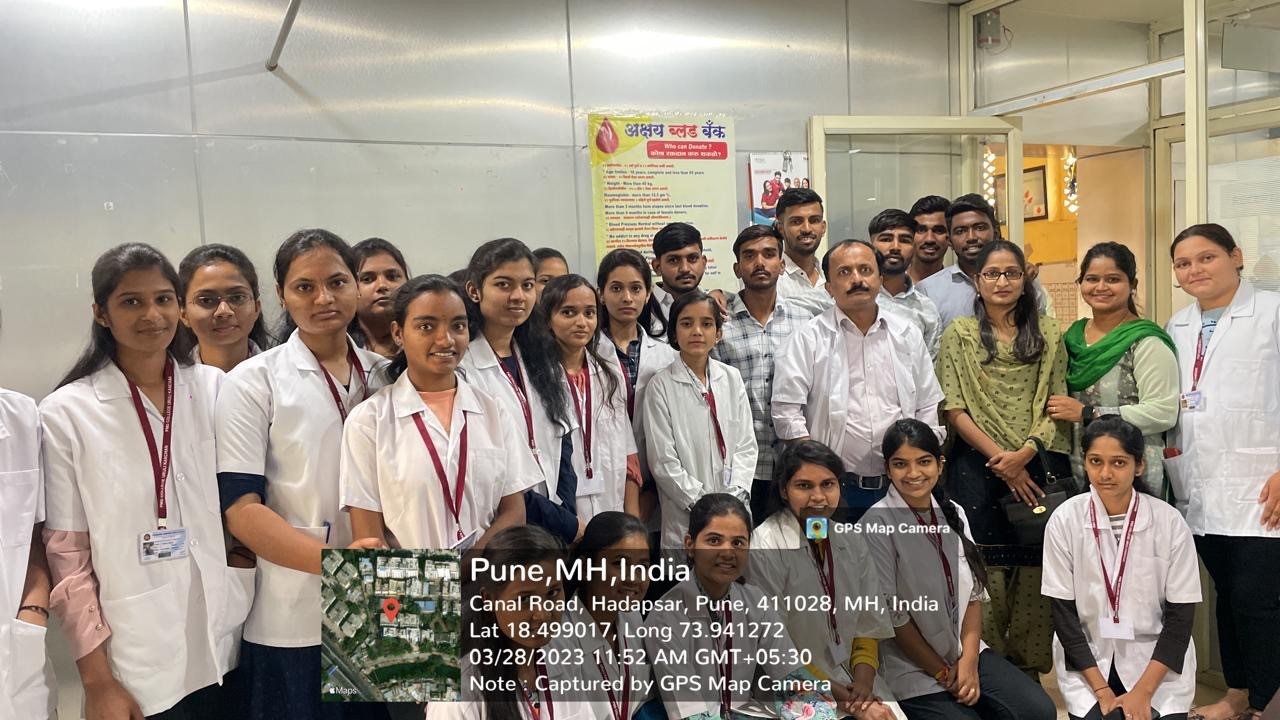
• Industrial visits and field trips to Blood Banks , food industries, research labs, etc.
• Participation in inter-collegiate science competitions, exhibitions, and quizzes
Extra-Curricular Activities
• Involvement in college-level clubs and committees (e.g., NSS, Cultural Club)
• Participation in sports, cultural fests
• Organization of departmental events, microbiology day, awareness drives, and health camps
These activities help students build confidence, leadership skills, teamwork, and a sense of social
responsibility.
Book Publish
Sr. No.
Name of Teacher
Book Name
ISBN/ISSN No.
Name of Publisher
1
Prof.Zate.A.S
Food and Dairy Microbiology
978-93-5473-221-8
International Journal of Microbial Science
Fermentation Technology and Agricultural Microbiology Practical Handbook
978-93-93337-17-7
International Journal of Microbial Science
MB-3510 Marine Microbiology
1675371178
International Journal of Microbial Science
2
Prof.Masalkar.S.D
Immunology I
978-93-54-73-210-2
International Journal of Microbial Science
Fermentation Technology and Agricultural Microbiology Practical Handbook
978-93-93337-17-7
International Journal of Microbial Science
MB-3510 Marine Microbiology
1675371178
International Journal of Microbial Science
Collaborative Learning
MoUs with Research Institutes & Environmental Organizations
For internships, training, and collaborative research.
Internship Programs
For third-year students in wildlife conservation centers, environmental consultancies, and ecological
research labs.
Expert Mentorship
From professionals working in academic, government, and NGO sectors.
Guest Lectures and Workshops
Featuring biologists, ecologists, taxonomists, and researchers.
Training & Placement
Dedicated Career Guidance Cell
Organizes sessions on competitive exam preparation, higher studies, and research opportunities.
Resume Writing & Interview Preparation
Training sessions to prepare students for job applications and academic admissions.
Linkages with Recruiters and Research Organizations
Facilitating career paths in labs, universities, NGOs, and wildlife agencies.
Alumni Mentorship
Past students guide juniors in career selection, fellowships, and networking.
Research Paper Publication
Sr. No.
Name of faculty
Workshop/ Seminar/ Conference
Level (Internation/ National/ State)
Activity (Participation/ Paper Presentation)
Journal Name
ISBN/ISSN No.
Title of Paper
1
Prof.Anuja Zate
Conference
International
Paper Presentation
International Journal of Multifaceted and Multilingual Studies
978-81984753-50
Study on antimicrobial property of Agaricus bisporus
Prof.Anuja Zate
International
Paper publish
International Journal of Recent Scientific Research
978-81984753-50
An attempt to reduce the fermentation time for making idlis faster
Prof.Anuja Zate
seminar
Sate
Participation
978-81984753-50
Ancient Groves and Modern Science: Bridging Wisdom in Conservation
2
Prof.Pr atiksha Kodre
Conference
International
Paper Presentation
International Journal of Multifaceted and Multilingual Studies
978-81984753-50
Soil and its role in Sustainable Ecosystem
Prof.Pr atiksha Kodre
Conference
International
Paper Presentation
Sustainable Development’; Conference Proceedings
978-81984753-50
Isolation of fungi Produci ng pigment and Charact erization of pigment
Prof.Pr atiksha Kodre
Conference
National
Participation
Recent Studies in Applied Sciences
Prof.Pr atiksha Kodre
Seminar
State
Participation
Ancient Groves and Modern Science: Bridgin g Wisdom in Conservation
3
Prof.Swati Masalkar
Conference
International
Paper Presentation
International Journal of Multifaceted and Multilingual Studies
978-81984753-50
Development and Formulation of natural room freshener from Azadirachta indica
Paper Publish
Gorteria Journal
00172294
MICP For Sustaina ble Green Environment
seminar
state
Participation
Ancient Groves and Modern Science: Bridging Wisdom in Conservation