Department of Zoology

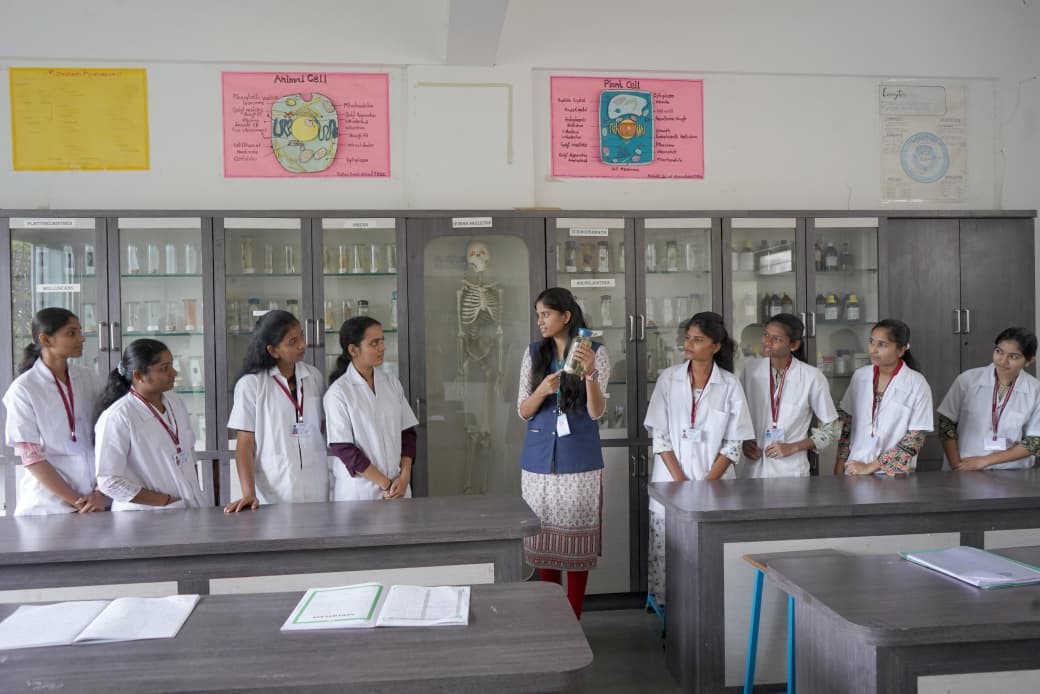
Develop practical skills: accurate observation, specimen handling, lab techniques, field identification, data collection & analysis.

BBA CA

Overview

The Department of Zoology is dedicated to the comprehensive study of animal life, from the microscopic structure of cells to the complex dynamics of entire ecosystems. Our department serves as a hub for scientific inquiry, conservation, and biological innovation. We aim to equip students with a deep understanding of biodiversity, evolutionary biology, and physiological processes.
Objectives

The goals of our undergraduate programs (B.Sc. Zoology) are to:

  • Impart competence in core zoological subjects—diversity of animals, their structure & function, development, genetics, physiology, behavior, and evolutionary relationships.
  • Develop practical skills: accurate observation, specimen handling, lab techniques, field identification, data collection & analysis.
  • Foster environmental and conservation awareness: understanding ecosystems, native fauna, threats to biodiversity, and measures to protect and sustain them.
  • Promote research aptitude by guiding students in small research projects, seminars, paper presentations and exposure to contemporary advances in zoology and allied sciences.
  • Prepare students for diverse career paths: academia, research, environmental and wildlife services, public policy, industry (e.g. biotech, ecotourism), competitive examinations.
  • Encourage community outreach: awareness programmes, field visits, citizen science, conservation efforts.

Vision

  • To become a center of excellence in Zoological education and research, fostering scientific curiosity, environmental awareness, and ethical conduct, so that our students can contribute meaningfully to biodiversity conservation, academia, and society at large.

Mission

  • To provide students with strong foundational knowledge in animal biology, covering morphology, physiology, ecology, behavior, genetics, and evolution. To blend theoretical instruction with hands on, experiential learning through labs, field work, projects, and excursions. To nurture ability for independent learning, critical thinking, scientific inquiry, and ethical awareness. To equip students with skills relevant to regional and national needs, including wildlife conservation, environmental management, and related biotechnology.

Student Achievements & Participation

  • Participation in national and state-level science fairs, zoology fests, and wildlife conferences
  • Awards in poster presentations, nature photography, and quiz competitions
  • Active involvement in social outreach, environmental awareness programs, and NSS activities
  • Contributions to research articles, biodiversity documentation, and eco-club initiatives
  • Volunteer work in animal rescue, habitat cleanups, and local conservation projects

Best Practices

  • Guardian and Mentor-Mentee System A structured mentoring approach offering personalized academic and emotional support. Faculty mentors regularly meet students to discuss academic progress, field training needs, and career planning.
  • Remedial and Bridge Courses Special sessions for students needing support in foundational topics such as cell biology, physiology, or genetics. Bridge courses for students transitioning from different academic backgrounds to adapt to core life sciences.
  • Skill Enhancement Courses Certification and add-on courses in relevant areas such as Wildlife Conservation, Bioinformatics, Environmental Impact Assessment, Scientific Communication, and Laboratory Techniques.
  • Institutional Collaboration MoUs with environmental NGOs, wildlife research centers, and zoological parks for internships, guided fieldwork, conservation projects, and career exposure.
  • Guest Lectures and Research Talks Regular interactive sessions by ecologists, zoologists, researchers, forest officers, and conservation professionals to bridge the gap between classroom learning and real-world biological challenges.

Teaching Pedagogy

The department adopts diverse and innovative teaching strategies to foster academic engagement and field-based understanding:

  • Interactive Lectures and Group Discussions
    Encouraging critical thinking, scientific dialogue, and deeper conceptual clarity.
  • Flipped Classroom Approach
    Use of videos, field observations, and research articles assigned before class to promote active in-class participation.
  • Field-Based Learning
    Regular ecological excursions, biodiversity assessments, and nature trails enhance observation skills and ecological awareness.
  • Specimen-Based Learning and Demonstrations
    Utilization of preserved specimens, museum collections, and live observations to aid identification and classification.
  • Assignments, Field Diaries, and Presentations
    Students are encouraged to document field observations, conduct mini-research projects, and present findings.
  • Aptitude and Research Training
    Regular sessions on research methodology, scientific writing, and preparation for competitive exams like CSIR-NET, SET, and life sciences fellowships.

ICT Integration

While rooted in practical life sciences, the department effectively integrates digital tools to enhance teaching:

  • Google Classroom and Email Groups
    Used for sharing study materials, assignments, and announcements.
  • Video Demonstrations
    For complex topics like animal physiology, embryology, or histological techniques.
  • WhatsApp Groups
    Quick updates, scientific article sharing, and real-time fieldwork coordination.
  • PPTs, e-Notes, and Digital Quizzes
    Regularly used for interactive assessments and student engagement.

Laboratory & Practical Work

  • Dedicated Laboratory Sessions
    Practical sessions in animal physiology, genetics, ecology, and taxonomy with modern tools and microscopes.
  • Field Equipment Training
    Use of nets, traps, GPS, transect and quadrat methods for ecological surveys and biodiversity studies.
  • Real-Time Specimen Identification
    Hands-on sessions for species identification using keys and online databases like FishBase, Avibase, and India Biodiversity Portal.
  • Histology and Slide Preparation
    Training in tissue processing, staining techniques, and slide analysis.
  • Project-Based Learning
    Mini-projects and field studies on local fauna and ecosystems help students apply theoretical knowledge.

Assessment & Evaluation

  • University-Mandated Examinations
    Semester-based theory and practical exams conducted as per university norms.
  • Internal Evaluation Components
  • 1. Unit Tests & Class Quizzes
  • 2. Assignments and Field Reports
  • 3. Lab Records and Practical Tests
  • 4. Viva Voce and Group Presentations
  • Continuous Assessment
    Ongoing evaluation through active participation, field journals, and mini research tasks.
  • Final Year Research Project
    A compulsory field/laboratory-based research project that enhances inquiry-based learning and practical exposure.

Co-Curricular Activities

  • Field Visits to Wildlife Sanctuaries, Zoological Parks, and Natural Habitats
  • Biodiversity Mapping and Species Documentation Projects
  • Participation in Citizen Science Projects (e.g., bird counts, butterfly watches)
  • Simulation Exercises (e.g., habitat management, food web construction, ecological modeling)
  • Nature Trails, Field Diaries, and Habitat Restoration Drives
  • Collaborative Research with Forest Departments and Local NGOs

Experiential Learning

  • Industrial Visits to software companies, tech hubs, and startups.
  • Business Fairs to develop entrepreneurial thinking and marketing strategies.
  • Simulation Activities and role-playing exercises to instill business and IT skills.
  • Live Projects guided by industry experts and faculty mentors.

Collaborative Learning

  • MoUs with Research Institutes & Environmental Organizations
    For internships, training, and collaborative research.
  • Internship Programs
    For third-year students in wildlife conservation centers, environmental consultancies, and ecological research labs.
  • Expert Mentorship
    From professionals working in academic, government, and NGO sectors.
  • Guest Lectures and Workshops
    Featuring biologists, ecologists, taxonomists, and researchers.

Training & Placement

  • Dedicated Career Guidance Cell
    Organizes sessions on competitive exam preparation, higher studies, and research opportunities.
  • Resume Writing & Interview Preparation
    Training sessions to prepare students for job applications and academic admissions.
  • Linkages with Recruiters and Research Organizations
    Facilitating career paths in labs, universities, NGOs, and wildlife agencies.
  • Alumni Mentorship
    Past students guide juniors in career selection, fellowships, and networking.

Research Paper Publication

Sr. No. Name of faculty Workshop/ Seminar/ Conference Level (Internation/ National/ State) Activity (Participation/ Paper Presentation) Journal Name Title of Paper
1 Prof. Takawane G. S. Conference International Participation International Journal of Scientific Research in Engineering and Management (IJSREM) Study the antibacterial effect of Ocimum Sanctum leaf extract on bacterial disease of silk worm.

Teaching Staff

Gauri Sanjiv Takawane

Gauri Sanjiv Takawane

HOD (Zoology)

Ă—

Designation:

Qualification:

Experience:

Expertise:

Mobile:

Email: